MFLCClimate Submit an idea Ask a question Contact MFLC
MFLC, Maldives Finance and Leasing Company Pvt LtdGreen Climate Fund

GCF Direct Access Entity · accredited October 2026

Your ideas. Our commitment. A climate resilient Maldives.

MFLC is the Maldives’ first national Direct Access Entity accredited to the Green Climate Fund. MFLC Climate is our gateway for climate finance in the Maldives: GCF programmes, other international partners and MFLC’s own green finance. Bring us your idea, from one rooftop to a whole island.

Submitting an idea does not constitute an application for, or approval of, GCF or MFLC financing.

About MFLC Climate

What MFLC’s accreditation means

MFLC is the Maldives’ first national Direct Access Entity accredited to the Green Climate Fund, the world’s largest dedicated climate fund. The accreditation was approved at the 46th meeting of the GCF Board, 26–29 October 2026, in Songdo, Incheon, Republic of Korea.

Direct access

MFLC can develop and submit funding proposals directly to the GCF, subject to GCF’s requirements and project-specific approval.

A pipeline first

The immediate priority is a pipeline of viable climate projects, built with the Government, businesses, communities and development partners.

Built on green finance

MFLC’s Green Loan and Lease programme has financed renewable energy, efficient technology and sustainable transport since 2022.

What it does not meanAccreditation does not mean MFLC already holds GCF funds or has approved GCF projects. Every project needs its own approval, and submitting an idea does not guarantee financing or GCF eligibility.
“While we are proud of this achievement, we recognize that accreditation is only the beginning. The real measure of our success will be our ability to translate this opportunity into meaningful investments that benefit the Maldives.”
Ibthishama Ahmed Saeed · Managing Director & CEO, MFLC
Green Climate FundProgrammes and projects MFLC develops as a Direct Access Entity. About our partnership
International partnersOther climate funds and development partners MFLC works with.
MFLC green financeThe Green Loan and Lease and other eligible MFLC financing.
Ways we may finance LoansLeasesConcessional financeTechnical assistancePerformance-based incentivesBlended finance
Climate finance opportunities

Funding windows

Indicative priority areas MFLC is building a project pipeline for. Choose one to start your idea.

Show what fits

Windows are indicative. Accreditation does not guarantee funding for individual projects, and all GCF proposals are subject to GCF approval. No amounts, rates or dates are set yet.

Ready to invest now?MFLC’s Green Loan and Lease, available since 2022, can finance solar, efficient equipment and cleaner transport today.
Similar projects

Ideas GCF already funds elsewhere

Real GCF-approved projects in other countries, many of them small islands. They are not MFLC projects. They show what has already passed GCF’s review and could be adapted for the Maldives.

FP061 · Antigua and Barbuda, Dominica, Grenada

Revolving loans for storm-proof homes

Government of Antigua and Barbuda · 2018

Revolving loans to households and businesses, and small grants to community groups, for hurricane-proofing, drainage and water conservation.

For the Maldives: small loans for stronger roofs and better drainage on inhabited islands.

See FP061 on the GCF site ↗
FP259 · 14 Pacific island countries

Tuna communities adapt

Conservation International · 2025

Fish aggregating devices, training for fishers, better post-harvest handling and forecasts of where tuna will move as the ocean warms.

For the Maldives: cold chains, catch handling and forecasts for pole-and-line tuna fishers.

See FP259 on the GCF site ↗
FP028 · Mongolia

Efficiency loans for small businesses

XacBank · 2016

Loans for energy efficiency and renewables to small businesses, with at least half going to women-led businesses.

For the Maldives: efficiency loans for shops, workshops and fish processors, with a share for women-led businesses.

See FP028 on the GCF site ↗
FP275 · Barbados, Belize, Jamaica

Pay for it on the power bill

Caribbean Development Bank · 2025

Rooftop solar, efficient appliances and retrofits that customers repay through their utility bill.

For the Maldives: efficient fridges, AC and rooftop solar repaid through the electricity bill.

See FP275 on the GCF site ↗
FP025 · 10 countries

Green credit lines through local lenders

EBRD · 2016

Credit lines to partner financial institutions, which lend to small businesses and households for efficiency and renewable energy.

For the Maldives: green credit lines through local lenders, building on MFLC’s Green Loan and Lease.

See FP025 on the GCF site ↗
FP189 · 9 Latin American and Caribbean countries

Electric buses, fleets and boats

IDB · 2022

Electric buses and commercial fleets, including electric boats, plus charging and the rules that make them work.

For the Maldives: electric or hybrid dhonis and ferries, with charging at harbours.

See FP189 on the GCF site ↗
FP295 · Tonga, Vanuatu, Samoa

Island farms that cope with climate

Pacific Community · 2026

Tools, equipment and technology to cover the upfront cost of switching to climate-resilient farming, with demonstration farms and market links.

For the Maldives: equipment that helps island growers cope with heat, drought and salty soil.

See FP295 on the GCF site ↗
FP213 · Barbados

A national green bank

Pegasus Capital Advisors · 2023

Equity for a green bank that lends and guarantees through local banks, credit unions and insurers.

For the Maldives: green lending windows in local banks, credit unions and insurers.

See FP213 on the GCF site ↗

Already in the Maldives with GCF FP007 · Water security · UNDPFP165 · Safer islands · JICASAP050 · Early warning · UNEPFP190 · Climate Investor Two · FMO GCF in the Maldives ↗
GCF investment framework

How the GCF judges a project

Every GCF funding proposal is assessed against six investment criteria. MFLC uses the same six to shape ideas into proposals, so it helps to think about them from the start.

1

Impact potential

How much will it cut emissions, or protect people?

  • Mitigation: emissions avoided over the project’s life (tCO2e)
  • Adaptation: fewer losses of lives, assets and livelihoods to climate impacts
  • How many people benefit, directly and indirectly

For example: A resort’s solar and battery hybrid cuts generator hours; school rainwater tanks carry an island through the dry season.

2

Paradigm shift potential

Can it spread beyond one project?

  • Can it be copied or scaled up?
  • A clear, convincing theory of change
  • Removes the main barrier, and lasts after the money is spent

For example: One standard package lets ten guesthouses switch to solar, and the next island can use it too.

3

Sustainable development potential

What else gets better?

  • At least one co-benefit, with a baseline and a target
  • Benefits in at least two areas: economic, social, environmental, gender
  • Links to the Sustainable Development Goals

For example: Solar-powered ice for a fish cooperative: more income for women, less catch thrown away.

4

Needs of the recipient

Why does it need climate finance?

  • How vulnerable the country and people are
  • Financial, economic, social and institutional needs
  • What blocks public, private and international finance today

For example: Small guesthouses with tight budgets, no engineer and loan forms built for big companies.

5

Country ownership

Does the country want it, and can it deliver?

  • Fits the Maldives’ NDC and national plans
  • Built with the people and groups it affects
  • Engagement with the national designated authority is required

For example: An island council consults residents at the school and harbour before the design is fixed.

6

Efficiency and effectiveness

Is it good value for the money?

  • Cost per tonne of CO2e avoided
  • Other finance it brings in alongside GCF
  • Expected economic or financial return, and sector best practice

For example: A city hotel meters its energy first, then finances the fixes that pay back fastest.

No minimum co-financingThe GCF does not require a set amount of co-financing.
Only the support neededConcessional finance is kept to the minimum a project needs to be viable.
Benefits beyond climateAt least one co-benefit, in at least two of four areas.
The country agreesThe national designated authority is engaged on every proposal.
The journey

How it works

Nine steps from an idea on paper to verified results on the ground. The first four are quick; the rest depend on the project.

You
  1. 1
    Discover climate finance

    Learn about MFLC Climate, GCF accreditation and MFLC’s role.

  2. 2
    Explore opportunities

    Review the funding windows and the kinds of projects they cover.

  3. 3
    Submit your idea

    A short form: purpose, location, rough cost and expected benefits.

  4. 4
    Get a reference

    Straight away, with an explanation of what happens next.

MFLC
  1. 5
    Initial screening

    Climate relevance, strategic fit, readiness, eligibility and early safeguards.

  2. 6
    Concept development

    Feasibility, financing arrangements and environmental and social assessments, with you.

  3. 7
    Review and approvals

    MFLC governance and, where applicable, formal GCF and national processes.

Together
  1. 8
    Implementation updates

    Milestones and progress for approved projects.

  2. 9
    Share verified impact

    Results and community stories, published with consent.

An idea is not a funding proposal. GCF concept notes and funding proposals are separate, formal submissions that MFLC makes through the GCF Partner Portal. They need a no-objection from the national designated authority and go through GCF appraisal and Board approval.

Resources

Read before you start a proposal

Guidance, templates and policies that explain how a climate project is assessed, so you can prepare a stronger idea. You don’t need to fill in any GCF template to submit an idea to MFLC.

Checklist

How to prepare your idea

Rough answers are fine. The clearer these are, the faster MFLC can screen your idea.

Submit your idea
  1. The climate problem, with a number. What goes wrong today, and how much: litres of diesel, days without water, storm damage.
  2. Your solution and a rough cost. What you would build or buy, and roughly what it costs, even as a range.
  3. Who benefits. Households, guests, staff or fishers; how many people; any benefit for women and girls.
  4. Fit with plans. Whether it supports the Maldives’ NDC, a national plan or your island council’s plan.
  5. Who you have talked to. Island council, community, utility or a government agency.
  6. What you already have. Quotes, drawings, an energy audit or a feasibility study. Attach them if you can.
Submit your climate idea

Tell us what you’d build, or ask us anything

One rooftop, one boat or a whole island. A few clear lines are enough to start. Some optional questions follow the GCF’s six criteria, so the strongest ideas can move towards a proposal faster.

Please note: submitting an idea does not constitute an application for, or approval of, GCF or MFLC financing, and does not guarantee eligibility. Your details go securely to MFLC and are used only to respond to you and develop climate finance projects. See the privacy notice.

Have a complaint or concern about a project instead? Use the grievance mechanism.

Online submissions are closed at the moment. Please email cto@mflc.mv with your idea or question.

I am submitting as *
Your projectShort answers are fine.
0 / 1000
0 / 1500
Climate impactMain climate benefit *
Expected community and environmental benefits (tick all that apply)
Documents (optional · up to 3 files, PDF, JPG or PNG, 10 MB each)
Choose files or drop them hereA concept paper, drawings or a feasibility study, if you have one.
    More about fit with the GCF criteriaOptional. Helps MFLC see which ideas could grow into GCF proposals.
    NeedsWhat stops you doing it today? (tick all that apply)
    Country ownershipWho have you talked to? (tick all that apply)
    * Required
    Projects and impact

    Results you can check

    As projects are approved and built, this is where MFLC will publish them, with progress, verified results and the experiences of the people they reach.

    Coming as projects are approved

    No projects are listed yet

    MFLC’s accreditation is new, and GCF-funded projects need their own approval before they start. We will not show a project here until it is approved, and we will always mark which results are forecast and which are measured.

    People reachedClean energy generatedEmissions avoidedResilience improvementsLivelihood benefits
    • The challengeWhat the community faced.
    • The financed solutionWhat was built and how it was paid for.
    • Implementation statusMilestones, from approval to completion.
    • Intended benefitsWhat the project set out to achieve.
    • Verified resultsMeasured, checked and clearly labelled.
    • Beneficiary experiencesStories and photos, shared with consent.
    Questions

    Frequently asked questions

    Can’t find your answer? Ask about climate finance.

    Can’t find your answer? Contact MFLC.

    Does submitting an idea mean I am applying for GCF funding?

    No. A project idea or question is an expression of interest only. It is not an application for, or approval of, GCF or MFLC financing. Formal GCF concept notes and funding proposals are separate submissions that MFLC prepares through the GCF’s own processes.

    Does accreditation mean MFLC already has GCF money to lend?

    No. Accreditation means MFLC can develop and submit funding proposals directly to the GCF. Each project still needs its own GCF approval before any GCF funds are available, so no GCF-funded projects or amounts exist yet.

    Who can submit an idea?

    Individuals and households, businesses and SMEs, resorts and hotels, NGOs, community organisations and cooperatives, island councils, government entities and development partners in the Maldives.

    Is MFLC Climate only about the GCF?

    No. It is MFLC’s gateway for climate finance in the Maldives: GCF programmes, other international funding partnerships, and MFLC’s own green financing such as the Green Loan and Lease.

    What happens after I submit?

    You get a reference number straight away. MFLC’s Investment Division then screens the idea for climate relevance, strategic fit, readiness, eligibility and early safeguards, and contacts you about next steps.

    How long does screening take?

    It depends on the idea and how much information is available. MFLC will acknowledge every submission and tell you what to expect. Larger GCF proposals take many months, because they need feasibility studies, safeguards assessments, national no-objection and GCF approval.

    Do I need documents or a full proposal?

    No. A few clear lines are enough to start. You can attach a concept paper, drawings or a feasibility study if you have one. MFLC will ask for detailed documents only after the first screening.

    Can I track my submission online?

    Not yet. Keep your reference number and quote it when you contact MFLC. Secure online tracking is planned for a later phase of the portal.

    Can I get green finance now, without waiting for the GCF?

    Possibly. MFLC’s Green Loan and Lease, available since 2022, finances solar, efficient equipment and cleaner transport today. Mention it in your idea or question.

    How is my information used?

    Only to respond to you and to develop climate finance projects. It is stored securely in Microsoft Azure and is not shared outside MFLC without asking you first. See the privacy notice.

    Resources and contact

    Contact and grievances

    Questions about climate finance, and concerns about projects, go through separate routes so each gets the right attention.

    Contact MFLC

    For questions about climate finance, use the question form, or reach us directly.

    www.mflc.mv ↗

    Separate route

    Grievances and concerns

    If an MFLC-financed activity affects you, or you are concerned about its environmental or social effects or its green finance claims, you can raise a grievance. It is handled confidentially, separately from project ideas and questions, and you can stay anonymous.

    • Acknowledged within 5 working days.
    • No retaliation against anyone who raises a concern in good faith.
    • Raising a concern will not affect any application you have with MFLC.

    Raise a grievance

    Ideas and opportunities

    What climate finance could change

    From one rooftop to a whole atoll. Explore an illustrative 3D story of one Maldivian community, then pick the opportunity closest to your own plans.

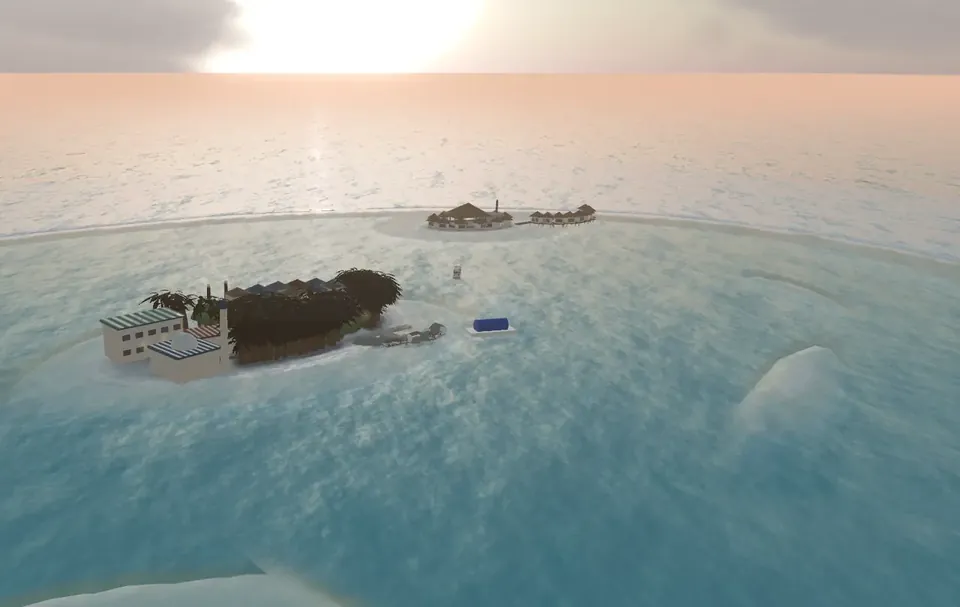
    A 3D view of a Maldivian atoll at dawn: an inhabited island, a resort and the lagoon Interactive 3D story Zaina’s Fehivilu: one community, many lives Follow Zaina from eight to thirty-two, 2026 to 2050, and meet the neighbours who change the atoll around her: a guesthouse owner, a fisherman, a fish cooperative, a council officer, a resort engineer and a hotel manager in Malé. Explore the 3D story Illustrative people and places. The live 3D is about 1 MB, best on Wi-Fi.

    Possibilities to start from

    Choose one to open the idea form with its funding window already selected.

    Seven deep dives